

Meet the Members: Yena Kim
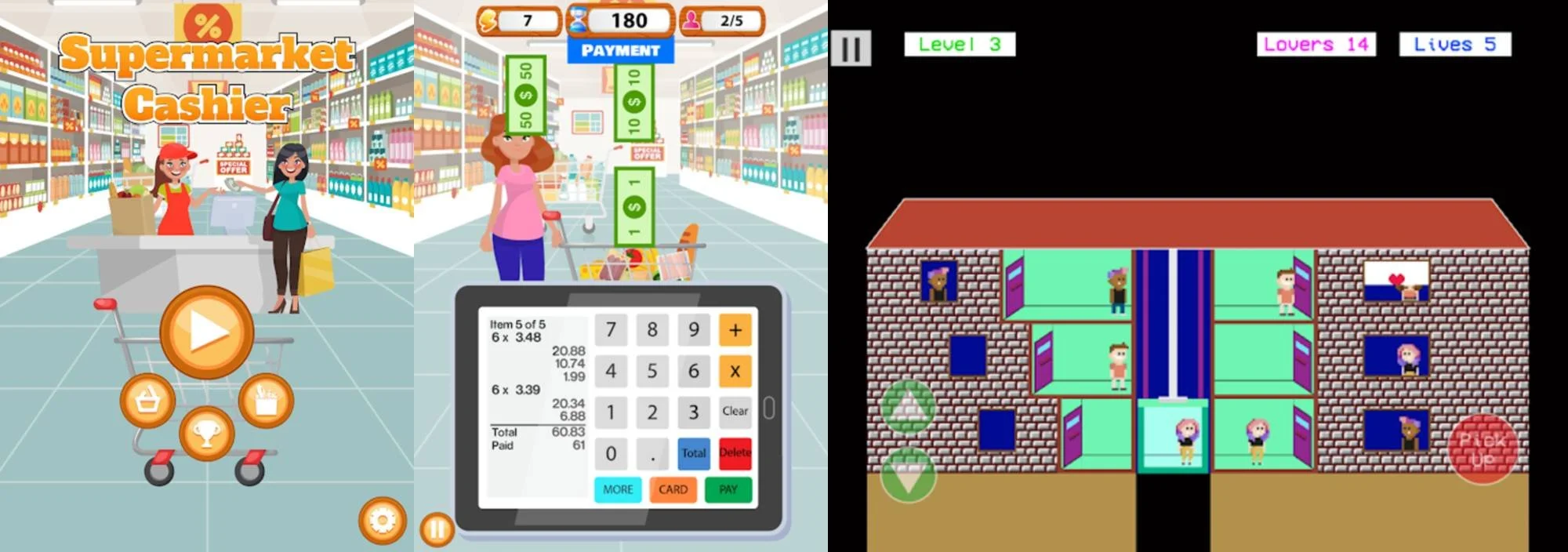
From L to R: Two screenshots of Yena’s Supermarket Cashier Simulator game and a screenshot of a new game, Elevator Simulator. All photos provided by Yena Kim.
“Meet the Members” is a periodic series that profiles the various creatives that inhabit Local Color’s Creative Spaces. Our Creative Spaces program offers low-cost workspace for artists and creatives working in a variety of fields.
Yena Kim is an indie game developer based in the Bay Area. One of her games, Supermarket Cashier Simulator, has trended in the App Store and Google Play of several countries and garnered millions of downloads worldwide. When she’s not working on her next game, you can find her learning different sports like longboard dancing, tai chi, pickleball, and tumbling.
Hi Yena! What’s your “art” story? In other words, was there a specific person or event that led you to your art?
I grew up loving video games and wished I could make my own games. I thought you had to be a genius to make video games, but I learned as an adult that there are softwares that make it easier to build games. Once I found that out, I got to learning game development.
I noticed that your game company is named Lucky Hamster Games. Is there any story behind the name?
My favorite animal is the hamster and the lucky cat is a popular symbol that I see often, so I combined the two.
How has your art style evolved?
My first games were very simple and amateur. I slowly got better at coming up with game mechanics, but also improving the overall feel and look of a game. I use vector art, most of which I bought from other artists, but I am learning pixel art for my next game.
How has having a studio space helped propel your art career?
I feel more motivated and focused by having a space dedicated to my craft. I also want to be more creative as I see all the different art works in the studio and around the SOFA district.
Are there any other art media you would like to venture into?
Currently, I am learning woodworking and attempting to make an arcade cabinet to run one of my games in. I am also planning on taking a fine arts class this year. I heard if you want to get good at game art, taking a traditional art class is very helpful.
Do you have any advice for creatives or artists?
My motto for pursuing anything is to start small and improve gradually. Another [piece of] advice would be to look at all kinds of different mediums to get inspiration.